
4
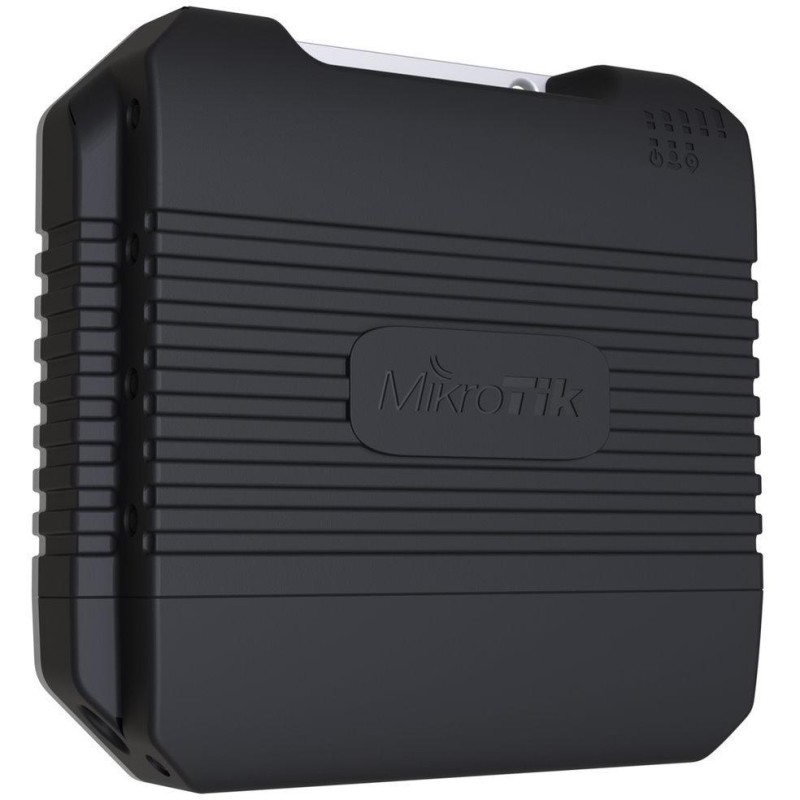
MikroTik LtAP LR8G LTE6 kit, Wi-Fi 2.4 GHz b/g/n, 3/4G (LTE), 2.5 dBi, 3x SIM slot, GPS, LoRa, LAN, L4
211,36 €
Description
MikroTik LtAP LR8G LTE6 kit Access point in a robust design, with 360° coverage, integrated LTE6 modem, GPS support and LoRa protocol. It operates at a frequency of 2.4 GHz with support for 802.11b/g/n standards. It is suitable not only for outdoor areas, but also for halls, vestibules or vehicles. The device is equipped with two internal LTE antennas, but using u.FL connectors you can add external antennas of your choice for even better coverage. The 2.4 GHz antenna has a gain of 2.5 dBi and supports 2×2 MIMO. There are three SIM slots with configuration options (automatic roaming, operator switching) and two miniPCIe slots, one of which is reserved for LTE and the other is equipped with a gateway card for LoRa technology. (Long Range). The durable rubberized body with IP54 protection, temperature resistance from -40 °C to +70 °C and a special wall mount is perfect for almost any installation. The unit includes Mikrotik RouterOS software with L4 license. The unit can be used as an access point. Power options are as flexible as possible – there is a classic DC connector (12-30 V), passive PoE (12-30 V) and an automotive connector (12-27 V). Supported bands: LTE (FDD): 1/3/5/7/8/20/28 (2100/1800/850/2600/900/800/700) LTE (TDD): 38/40/41 (2600/2300/2500) 3G: 1/3/5/8 (2100/1800/850/900) LoRa is one of the wireless network protocols used in the world of IoT (Internet of Things). LoRaWAN (Long Range Wide Area Network) is another low-power wireless network protocol designed for cheap and secure two-way communication in the Internet of Things. It uses a band up to 1 GHz and the transmission speed is then from 0.3 kb/s to 50 kb/s. Communication between end elements and gateways is distributed over different frequency bands and transmission speeds. The choice of data transmission speed is a compromise between communication range and message length. Individual communication streams with different transmission speeds do not interfere with each other (due to spread spectrum technology) and create a set of “virtual” channels to increase the capacity of the gateway. To maximize the battery life of the end device and the overall capacity of the network, the LoRaWAN network server manages the transmission rate and RF output for each end device individually, through the Adaptive Data Rate (ADR) system. LoRaWAN distinguishes several classes of devices: Class A – end devices support bidirectional communication (each uplink is followed by two data reception windows) Class B – apart from the “forced” downlink of Class A, devices of this class open extraordinary reception windows at a set time Class C – reception windows are open almost continuously and are closed only when transmitting Information about the RouterOS MikroTik system RouterOS MikroTik fully supports IPv6 networks. You can find more information about IPv6 support in this link. If you want to get started with RouterOS MikroTik or need advice on more complex settings, you can use our unique support. If you are starting with RouterOS MikroTik or need advice on more complex settings, you can use our support. You can learn how to set up and manage RouterBoard at our training courses. Setup tips and frequently asked questions can be found in the Technical Support section. All RouterBoards have the same RouterOS MikroTik system. All devices with RouterOS MikroTik fully support IPv6, have a firewall, Queues, NAT and with an L4 license support the CAPsMAN server. MikroTik can be set up via a web interface, a mobile application, or the winbox program, which can be downloaded from mikrotik.com. MikroTik has a “Quick Set” option, i.e. a quick setup option. There are several preset profiles to choose from. BASIC SPECIFICATIONS Interface: LAN, Wi-Fi, GPS, 3G/4G/LTE, LoRA Wi-Fi standard: IEEE 802.11b/g/n Frequency band: 2.4 GHz (Wi-Fi), 863–870 MHz (LoRA) Antenna: integrated 2.5 dBi (Wi-Fi), 2× integrated (LTE) Ports: 1× RJ-45, 3× mini SIM slot, 1× RS-232 (console), 1× USB 2.0, 2× SMA (F) PoE support: yes, passive 12–30 V Power supply: DC 12–30 V, passive PoE 12–30 V, 4pin Automotive 12–27 V Dimensions: 170 × 162 × 40 mm Useful links and videos: Declaration of conformity + user manual Device setup via Quick Set quick guide Mobile phone control application Device reset, reset button function RouterOS MikroTik system recovery via Netinstall utility Address translation (NAT) settings Load Balancing settings (distribution of traffic between multiple Internet connections) Failover settings (switching the link to the backup in case of an outage) Multiple uplinks using PCC & Load balancing Static NAT & RouterOS MikroTips: Netinstall
Additional information
| Brand | MIKROTIK |
|---|---|
| Model | MikroTik |
| Execution | On the wall |
| Color | Black |
| Warranty period for registration number (months) | 26 |
| Manufacturer | MICROTIK |
| Warranty length (months) | 26 |
| Processed | Approved |
| Wi-Fi | Yes |
| RJ-45 (number) | 1 |
| Dimensions | 170 × 162 × 40mm |
| ESIM support | No |
| Outdoor use | Yes |
| Indoor use | Yes |
| USB 2.0 (number) | 1 |
| Max output power (dBm) | 26 |
| Gigabit LAN | Yes |
| Power regulation | No |
| PoE support | Yes |
| Port speed | 1 Gbps |
| Operating temperature min. (°C) | -40 |
| Wi-Fi standard | 802.11b/g/n |
| Wi-Fi frequency | 2400MHz |
| Standards | 802.11b/g/n |
| Operating temperature max. (°C) | 70 |
| Power supply (V) | 12 – 30 (DC) |
| Depth (mm) | 40 |
| Height (mm) | 170 |
| Width (mm) | 162 |
| MicroSD card support | No |
| Operating mode | AP |
| DHCP | No |
| Antenna design | Internal |
| HIND | Yes |
| SIM slot | Yes |
| Type of accessory | AP |
| Consumption (W) | 24 |
| Degree of protection | IP54 |
| Interface | LAN, Wi-Fi, 3G, 4G/LTE, GPS, LoRA, USB, RS-232 |
| Conformity | CE, FCC, IC, E-MARK, EAC, ROHS |
| 4G/LTE support | Yes |
| 5G support | No |
| LED indication | Yes |
| Power supply max. (jack) (V) | 30 |
| NAND (MB) | 16 |
| Gain (dBi) | 2.5 |
| Number of connectable antennas | 1 |
| LTE/4G/5G (Mbps) | 300 |
| Output to external antenna | Yes |
| Operating system | RouterOS v7 |
| Memory size (MB) | 128 |
| Number of processor cores | 2 |
| Wi-Fi 2.4GHz (Mbps) | 300 |
| Ethernet (Mbps) | 1000 |
| Processor | MediaTek MT7621AT, 880MHz |
| RS-232 port | Yes |
| 3G support | Yes |
| License | L4 |
| Power supply min. (jack) (V) | 12 |
| IPv6 support | Yes, full |
| PoE input | Passive |
| Slots | 1× LAN, 3× SIM slot, 1× USB, 1× RS232, 1× SMA (F) |
| PoE output | No |
| Power supply max. (PoE) (V) | 30 |
| Power supply min. (PoE) (V) | 12 |
| Extension | Integrated LTE modem |
| Beam angle – H. (°) | 360 |
Related products
-

MikroTik Chateau 5G R17 ax, 4x GLAN, 2.5 GLAN, 2.4+5GHz, 802.11a/b/g/n/ac/ax, LTE 20, USB 3.0, L4, indoor
303,82 € Add to cart Compare -
Teltonika RUT260 industrial router LTE CAT6
198,57 € Add to cart Compare -
MikroTik RouterBOARD LtAP LTE6 kit (2023), Wi-Fi 2.4 GHz b/g/n, 3G/4G (LTE) modem, 2.5 dBi, 3x SIM slot, GPS, LAN, L4
162,90 € Add to cart Compare -

MikroTik Chateau LTE7, 5x GLAN, 2.4+5GHz, 802.11a/b/g/n/ac, USB 2.0, LTE 7, L4, indoor
98,16 € Add to cart Compare